
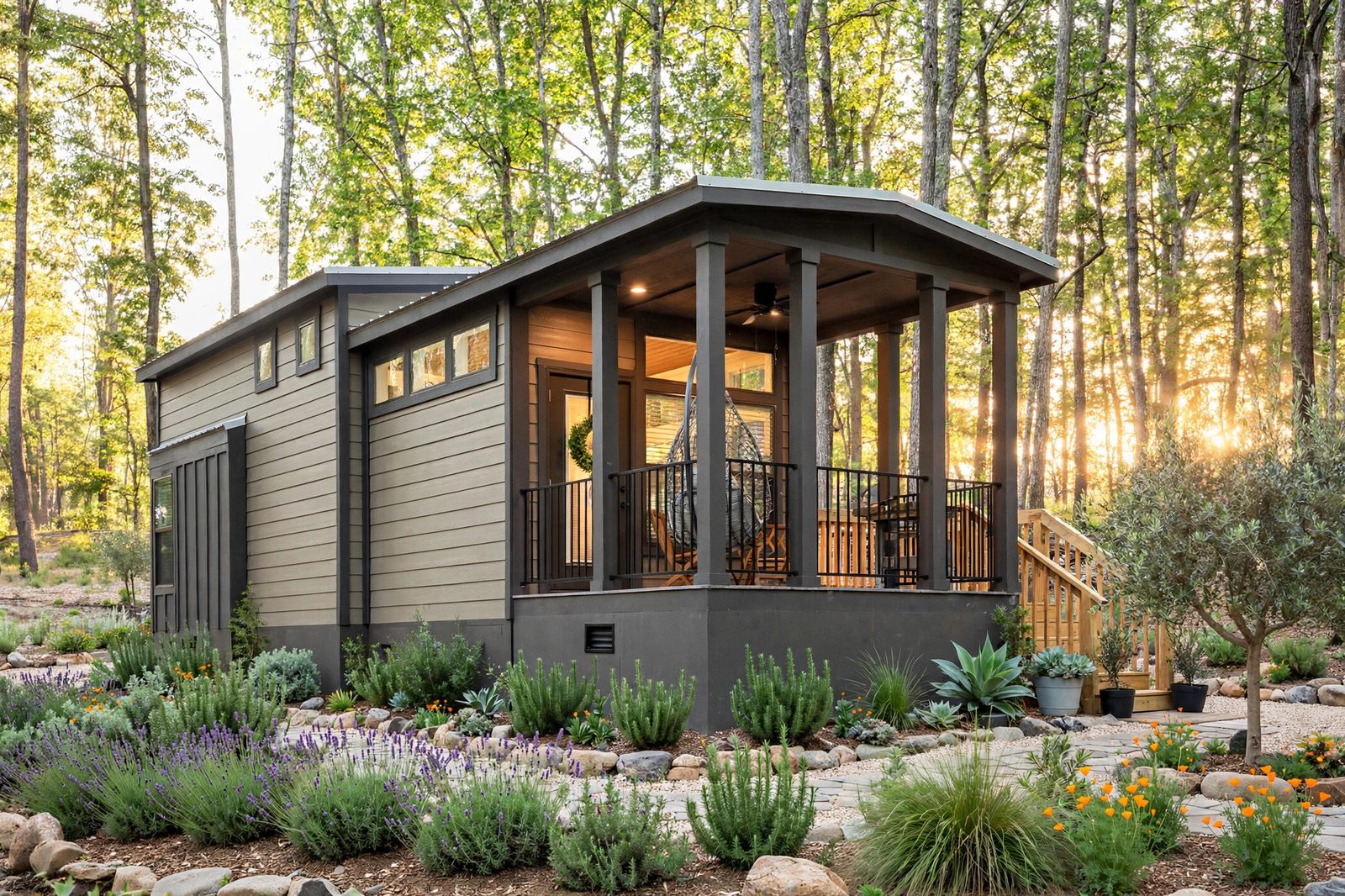
Moving into a tiny home is about gaining freedom, not losing things. Park Model RVs are thoughtfully designed so every square foot works hard — but that only works if what you bring along is intentional. The good news: downsizing is a skill, and it gets easier with a simple room-by-room plan.
Start With a Mindset Shift
Before you touch a single drawer, decide what your new life should feel like. Most tiny-home owners describe the same outcome: less clutter, less cleaning, and more time for the things they actually enjoy. Frame every decision around that feeling. You are not throwing your life away — you are choosing what comes with you.
The Kitchen: Keep What You Earn a Living With
Kitchens accumulate duplicates fast. Pull everything out and keep only the pots, pans, and tools you genuinely use each week. A Park Model RV kitchen is fully functional, so you do not need to downgrade how you cook — just how many gadgets support it. Donate the bread maker you have never used and the third set of measuring cups. One good knife beats a drawer of mediocre ones.
Closets: Dress for the Life You Have
Try this honest test: if you have not worn it in a full year, it does not move with you. Tiny-home closets reward a compact, mix-and-match wardrobe. Keep layers that work across seasons and pieces you reach for constantly. Off-season items can live in a labeled storage bin if you have room on your property — but resist the urge to keep "just in case" boxes that never get opened.
Furniture: Every Piece Should Earn Its Spot
Measure your new floor plan before you buy or bring anything. In a tiny home, the best furniture does double duty: a dining table that folds away, an ottoman with storage inside, a bed with drawers underneath. If a piece only does one thing and you can live without that thing, it stays behind.
Paper, Keepsakes, and Sentimental Items
This is the hardest part for most people — and the most freeing when it is done. Scan important documents and photos so the memories are safe digitally. For physical keepsakes, choose a small "memory box" and let it be the limit: when it is full, something has to go before something new goes in. Your kids do not want your clutter; they want your stories.
Make It a Process, Not a Panic
Give yourself plenty of lead time and tackle one room at a time. Sort into four groups — keep, donate, sell, recycle — and move donations out of the house immediately so they do not creep back. Many people find that selling a few larger items funds the move itself.
Downsizing done well does not feel like sacrifice. It feels like finally traveling light. Ready to see how your life could fit in a beautiful tiny home? Request a free quote or schedule a free consultation — we will walk you through the models and help you picture your space.
---
Please note: This article is for general information only. Rules vary by county and city — always check with your local county or city planning office for the specific rules that apply to your property before making decisions.